
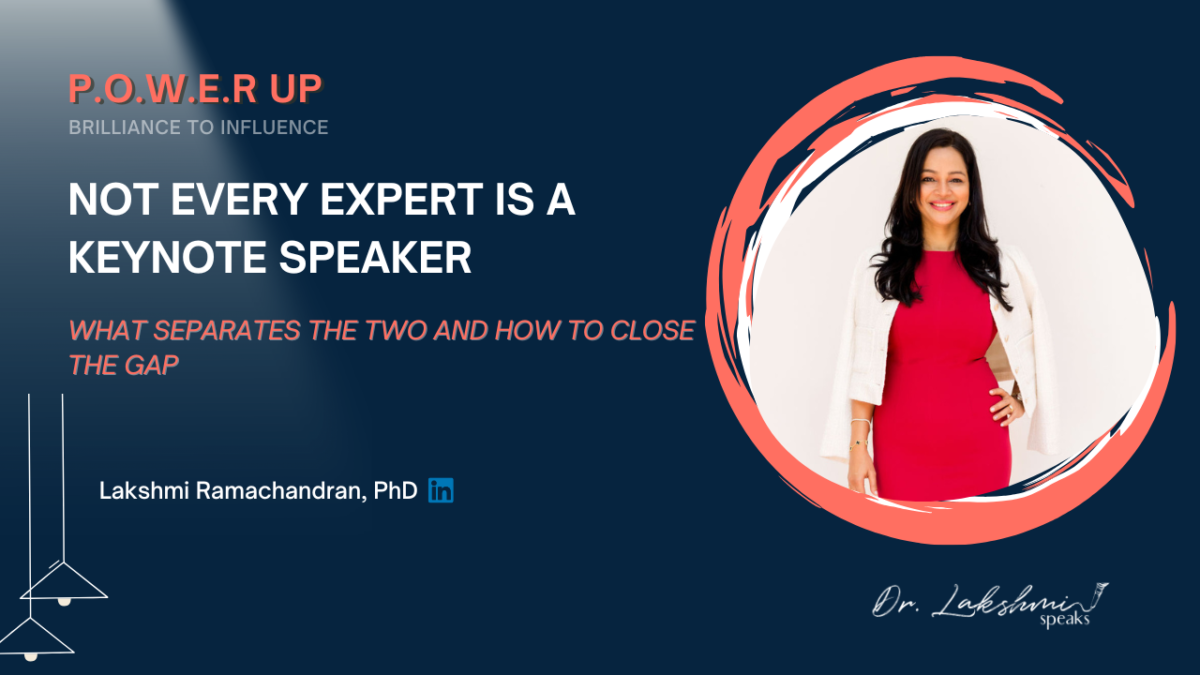
Not every expert is a Keynote Speaker
What separates the two and how to close the gap
The speaker is brilliant. Their credentials are unimpeachable. They know their field better than most other in the room. And yet as they start to speak, the energy in the room goes down and phones come out.
After the talk finishes, people walk away with nothing that will change how they think or what they will do differently.
This is not a knowledge problem. It is a communication problem which is more common than most experts like to admit.
The difference between speaking as a professional/expert and professional speaking.
This is a distinction worth understanding. Anyone with deep knowledge can stand at a podium and share what they know. That is public speaking in its broadest sense: presenting information to a group. This is significantly different from professional keynote speaking.
Let’s understand this by pausing on the word “keynote”. In music, the keynote sets the tonal foundation for everything that follows. A keynote speaker at an event does the same: they set the tone and the direction for the entire gathering, and they leave the audience in a different positive place (better informed, inspired and impacted) than when they walked in.
The craft is not in the content alone. It is in how that content is shaped, delivered, and received. Importantly, in how it moves people, not just informs them.
Why brilliant people sometimes lose the room
Experts who struggle on stage are rarely lacking in substance. The gap lies in in preparing the talk rather than preparing for the audience. In spending hours on what to say and very little time thinking about who is sitting in that room, what they already believe, what they are hoping for, and what would actually shift something for them.
You lose the audience the moment you treat them as a passive receiver of information rather than an active participant in something worth their full attention.
The single shift that changes everything: from “what do I want to say” to “what does this audience need to receive.” That reorientation rewrites the entire preparation process.
Four ways experts can hold the room better
If you are an expert who speaks at conferences, leadership forums, internal events, or client sessions these are the shifts that make the most consistent difference.
Research the room before you research the topic
Before you finalise a single slide, understand who will be in that room. What do they already know? What are they struggling with? What do they want to walk away with? The best speakers ask these questions before they write a word. The content you know well is your starting material and the audience profile tells you which parts of it matter.
Choose stories before you choose data
Data informs, stories move. Most expert speakers invert this ratio: they lead with evidence and support it with anecdote. The most memorable presentations do the opposite. They open with a moment the audience recognises such as a tension, a scenario, a human situation and use that as the lens through which the data becomes meaningful.
Design for one key shift, not ten takeaways
Experts tend to want to share everything they know. The audience can absorb far less than we think, and they remember far less than that. Ask yourself: if this audience forgets everything except one thing, what should that one thing be? Build the entire talk to deliver that. Clarity of intent at this level changes how you structure, pace, and close a talk.
Close on the audience, not on yourself
Many expert talks end with a summary of what was covered. The strongest closes leave the audience with something to sit with: a question, a reframe, a challenge to their current thinking. The final moment of a talk is the moment most likely to be remembered.
Being a professional speaker is a significant responsibility. Your audience has given up time to be in that room. They are quietly asking whether it was worth it.
In my own speaking journey, the biggest shift I made was not in how I structured content. It was in how I thought about who I was in the room for. The moment the focus moved from what I wanted to deliver to what the audience needed to receive, everything changed about how I prepared, how I showed up, and how the audience responded.
Brilliance without influence is invisible. The experts who learn to close that gap become far more impactful.
“The craft is not just in what you know. It is in what the audience receives.”
— Dr Lakshmi Ramachandran, PhD
Dr Lakshmi Ramachandran, PhD is a leadership communication coach, keynote speaker, and ICF PCC-credentialed executive coach. She works with senior leaders in knowledge-intensive organisations to develop communication, influence, and executive presence.
Favikon #1 communication skills influencer, LinkedIn Singapore, Member of Asia Professional Speakers Singapore (APSS) and KeyNote Women Speakers Directory.
Follow Lakshmi Ramachandran, PhD, PCC and visit www.drlakshmispeaks.com for more insights on how to turn your brilliance into influence with science backed insights and lived experiences on leadership communication and influence.